
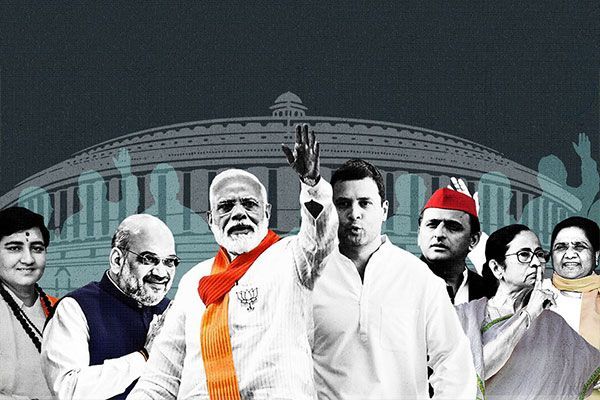
In modern politics, power is measured not only by electoral strength or parliamentary numbers but by something far less tangible, control over narrative. The political narrative in India is evolving rapidly as perception battles increasingly shape public discourse alongside governance.
For much of the last decade, the ruling establishment in India appeared firmly in command of both. Political messaging was sharp, centralized, and disciplined. Major announcements often set the national agenda for days, sometimes weeks. The opposition, in comparison, led by Rahul Gandhi frequently appeared reactive, struggling to impose its own framing on public discourse.
Yet the recent budget session of Parliament and a series of surrounding events suggest that the narrative battlefield has become more competitive than before. Political power equations may not have dramatically shifted, but perception, the currency of contemporary politics, appears less predictable and more contested.
The changing nature of the narrative battlefield
Politics today operates in a radically different communication environment than even a decade ago. The 24-hour news cycle has evolved into a 24-minute digital cycle where narratives are shaped and reshaped continuously across television, YouTube, and social media platforms.
In such an environment, governments are no longer the sole agenda-setters. Independent commentators, digital creators, opposition leaders, and decentralized media ecosystems all contribute to shaping public perception. Information travels faster, and counter-narratives emerge almost instantly.
The recent debates surrounding the proposed UGC-related legislative changes offer one such example of how quickly narrative space can shift. While the government’s intention may have been policy reform and structural adjustment, digital commentators and policy critics, such as Ajeet Bharti, quickly entered the conversation, dissecting clauses and raising questions. Regardless of the policy’s technical merits, the discussion demonstrated how narrative formation today often occurs outside traditional political or parliamentary channels.
Similarly, public commentary around statements linked to former Army Chief General Manoj Naravane’s book, and the subsequent political responses, showed how national security and institutional issues can quickly move from specialized discourse into mainstream political debate. When such discussions are amplified across media ecosystems, perception often becomes as significant as the original issue itself.
Why the political narrative in India is becoming more competitive
The political narrative in India today is no longer controlled by a single institution or political force. One of the defining features of contemporary political communication is the growing influence of independent digital voices. YouTube analysts, political commentators, and issue-based creators now shape public conversations in ways that were previously the domain of television studios and newspaper editorials.
This decentralization means that narrative control is no longer hierarchical. It is networked. A policy announcement, parliamentary debate, or isolated incident can generate multiple interpretations within hours. Some may support the government’s position, others may challenge it, but collectively they create a far more complex perception environment.
The Galgotias episode during the recent AI-related summit discussions, for instance, quickly moved beyond the immediate context of the event. Online discussions transformed it into a broader conversation about optics, organization, and political messaging. In the past, such moments might have remained limited to brief news coverage. Today, they can evolve into extended narrative threads across platforms.
The expectation factor after long incumbency
Another structural factor influencing perception is the natural evolution of public expectations after a decade of stable governance. Governments that rise on strong promises and decisive messaging often face what political observers describe as an “expectation plateau.” Initial achievements that once generated widespread attention begin to feel routine. Incremental progress receives less recognition, while gaps, real or perceived, receive amplified scrutiny.
This is not unique to any one political formation or country. Across democracies, long-standing governments frequently encounter phases where maintaining narrative dominance becomes more challenging than achieving electoral victories. The public becomes more demanding, opposition forces more coordinated, and media ecosystems more competitive.
In such an environment, even minor communication gaps or isolated controversies can accumulate into a broader perception of narrative drift. This does not necessarily reflect structural political weakness, but it does indicate a more contested information landscape.
Governance and perception: two parallel tracks
Modern governance operates simultaneously on two tracks. The first is policy delivery, legislation, economic management, infrastructure, and institutional decision-making. The second is perception management, how these actions are understood, interpreted, and communicated to the public.
The two do not always move in perfect alignment. Effective governance does not automatically guarantee positive perception, just as strong narrative control does not always reflect policy depth. Successful political leadership increasingly requires synchronizing both.
Historical patterns across global democracies suggest that narrative momentum is rarely permanent. It shifts with communication styles, media ecosystems, public expectations, and opposition adaptability. Periods of narrative dominance are often followed by phases of contestation and recalibration.
An evolving equilibrium
As India moves through another politically active year, the interplay between power and perception will remain central to its democratic discourse. The current phase does not necessarily signal a dramatic realignment of political strength, but it does highlight how rapidly narrative environments can evolve in the digital age.
As the political narrative in India becomes more competitive, perception and communication will play an even larger role in shaping public opinion. Power can be measured in seats and mandates. Narrative, however, is measured in perception, and in contemporary politics, perception often travels faster than governance itself.
For more thoughtful opinion pieces and deep dives, visit our opinions section.